

How Your Retirement Plan Works Together: Income, Taxes, and Investments
Five to ten years before retirement, it is natural to focus on a big question: Do I have enough saved?
That question matters. But the balance in your accounts is only one part of the picture. You also need to decide how those savings will become income, how taxes may affect what you keep, and whether your investments are aligned with the withdrawals you expect to make.
These decisions overlap. That is what this infographic illustrates.
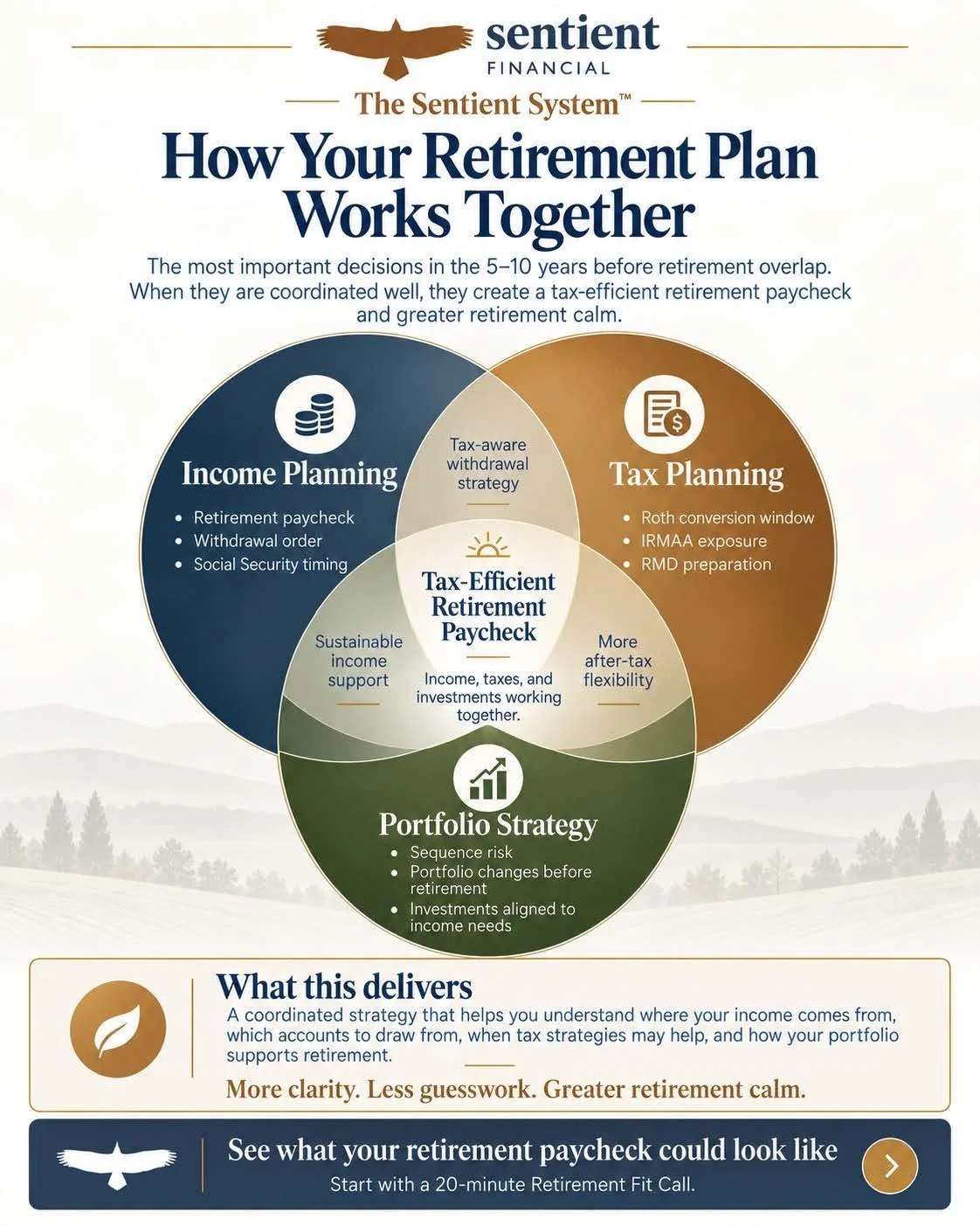
Income planning: Where will your paycheck come from?
A retirement income plan maps out the money available to support your spending. That may include Social Security, pensions, cash reserves, and withdrawals from investment accounts.
The timing and order matter. For example, claiming Social Security earlier or later can change how much you need to withdraw from your portfolio in the meantime. Drawing from a traditional IRA, Roth account, or taxable account can have different tax consequences.
The aim is to understand where your income could come from each year and what choices you have when circumstances change.
Tax planning: What happens after taxes?
Retirement can create planning opportunities, particularly if your income changes between leaving work and beginning required minimum distributions. In some cases, that period may be worth evaluating for Roth conversions or other withdrawal strategies.
Those choices need context. A conversion, for instance, can increase taxable income in the year you make it and may affect future Medicare premiums. The useful question is whether a strategy makes sense as part of your broader plan, given your accounts, income needs, and tax situation.
Portfolio strategy: Can your investments support the plan?
Once you know the income you may need from your investments, you can assess how the portfolio is positioned to provide it.
That includes considering market declines early in retirement, the amount you may need to withdraw, and whether you have enough flexibility to avoid selling investments at an unfavorable time. It also means revisiting the portfolio as your income needs change.
The value is in the coordination
An income decision can create a tax consequence. A tax decision can change how much stays invested. A portfolio decision can affect how comfortably you fund spending during a difficult market.
The Sentient System™ is my way of bringing those conversations together. The goal is a retirement paycheck you understand: where it may come from, which accounts you may use, and how the pieces support one another.
If retirement is getting closer and you want to see how your own pieces fit together, learn more about my retirement income planning process.
This article is educational and does not provide individualized investment or tax advice. Planning decisions depend on your circumstances.
